Jony.AVAX9000🔺 | 🌊📘🧪
@jonycsarkerFounder, CEO & Chief Protocol Architect @Balcore_AI | Ex-Intel | Founder @styledegenshop | Building DeFi liquidity infrastructure
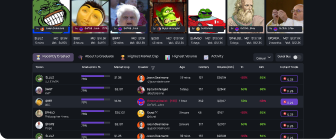
A little sneak peek at the @Balcore_AI user interface. As I’ve said before, and as I’ve promised, we are building Balcore to become the best place for market making on AMM DEXs.
The technology behind Balcore is incredibly complex, but the experience for users should be the exact opposite. Simple, intuitive, and accessible to anyone holding assets, from everyday investors to institutions. Let the system handle the complexity in the background while users focus on putting their assets to work.
We still have plenty to refine, improve, and perfect. And as the founder, I will do whatever it takes to get Balcore where it deserves to be. We will keep building, testing, fixing, and pushing until we deliver the experience and performance this industry deserves. This is just the beginning.
Be the Market Maker. There is no escape. 🔺
Jony.AVAX9000🔺 | 🌊📘🧪・@jonycsarker・14 hrs
Wrapped up the founder video today. 🎥
I wanted to explain @Balcore_AI in my own words, from my own experience as a liquidity provider. Why I built it, the problem I kept running into, and why solving it matters for the entire industry.
On AMM DEXs, you can collect trading fees and still fall behind because impermanent loss eats away at those earnings. I’ve experienced that frustration myself. It’s what pushed me to build Balcore, and today I tried to make this complex problem and our approach understandable to anyone watching.
Looking forward to getting the final video and sharing it with you. There’s a lot of personal experience and years of work behind this story.
Be the Market Maker. There is no escape. 🔺
Jony.AVAX9000🔺 | 🌊📘🧪・@jonycsarker・18 hrs
Good morning. ☀️
In front of the camera at the studio today, recording a founder video for @Balcore_AI. Sharing what we’ve built, the problem it solves, and why it matters, in my own words.
We’ve spent years working through a very complex problem in AMM market making, and I’m proud of the product we now have running. When you spend so much time deep in research and development, it’s easy to forget that most people are hearing about it for the first time.
Now it’s my job to help the world understand it. Explain it clearly, show what it can do, and bring people onboard. That’s what today is about.
Be the Market Maker. There is no escape. 🔺
Jony.AVAX9000🔺 | 🌊📘🧪・@jonycsarker・2 days
Just had a meeting with a motion designer, one of the best in the industry for SaaS products, about the @Balcore_AI explainer video. His note after the call is below.
I share it because it says something about how we work and our mentality. This is someone I had never met before that call. He left it with a clear picture of what we are building, and now he is going to work as hard as I do to bring the best out of it. That is what preparation does. Balcore is complex software, autonomous market-making infrastructure for automated market maker (AMM) decentralized exchanges (DEXs), built to keep fees ahead of impermanent loss, and the people who help us tell that story deserve the same preparation we give an investor or an engineer: every mechanism explained, every question answered, nothing left for them to guess. When someone understands the work, they do their best work, and the respect comes back the same way.
As a founder, making this product understandable to the world is my job, and we will take Balcore where it deserves to be: the best market making for AMM DEXs and for tokenized assets. The explainer is in preparation now.
Be the Market Maker. There is no escape 🔺
Jony.AVAX9000🔺 | 🌊📘🧪・@jonycsarker・3 days
Three-hour train ride back home. Thought I might as well put those three hours to work. 😂
Gave Fable5 a pretty ambitious task and told it to use its maximum capabilities. It's been running for over 1.5 hours now and is still compiling. You can probably imagine the kind of list I'm putting together. Definitely not a grocery list. 😎
After TOKEN2049, I have a much clearer picture of where Balcore needs to go next, who we need to reach, and what it will take to scale this working product. Now it's about connecting the dots, identifying the right people around the world, and turning all that momentum into something meaningful.
Some people use a train ride to relax. I'm using mine to plan the next moves for @Balcore_AI. The conference is over, but the real work is just getting started.
Be the Market Maker. There is no escape. 🔺
Jony.AVAX9000🔺 | 🌊📘🧪・@jonycsarker・5 days
That’s a wrap on TOKEN2049. Heading back to the USA tomorrow with a lot of new connections for @Balcore_AI and plenty of conversations to continue. Showing people the working product live sparked real interest in learning more about what we’re building.
Once I’m back home, I’ll start following up and sharing the details they need for their due diligence. Making the connections was the first step. Now comes the work of turning those conversations into something meaningful for Balcore.
For tonight, enjoying a little of Singapore’s vibe over some great food. Crowded, lively, and full of energy. A pretty good way to spend the last evening here. 🇸🇬
Be the Market Maker. There is no escape. 🔺
Jony.AVAX9000🔺 | 🌊📘🧪・@jonycsarker・5 days
Sent my wife a picture from another conference in Singapore. She replied, “Why don’t you spend some time exploring? Singapore is so beautiful.”
Hahaha. She’s trying to get me into tourist mode, and I’m here thinking how many more meetings I can fit in before my flight. 😂
I told her I’m probably not the right guy for sightseeing right now. I’m a man on a mission. Get @Balcore_AI where it deserves to be and scale it ballistically. That’s all I have room for in my head.
Singapore, you’re beautiful. But I came here to build Balcore’s future. I’ll admire you through the taxi window between meetings. 🤣
Be the Market Maker. There is no escape. 🔺
Jony.AVAX9000🔺 | 🌊📘🧪・@jonycsarker・5 days
At RWA Summit Singapore today, connecting with institutions, VCs, and family offices to showcase what we’re building at @Balcore_AI.
Tokenization brings assets onchain. The next challenge is building liquid markets that make economic sense for the people providing that liquidity. They participate to earn trading fees, yet impermanent loss can shrink the value of their underlying assets faster than those fees come in. Bringing tokenized equities and other real-world assets into AMM DEXs carries that same problem into much bigger markets.
That is the problem we’re tackling at Balcore. We have a working product operating with real capital, built to automate market making, manage inventory, and keep fees ahead of impermanent loss. I’m here to show it in action and connect with partners who understand what it takes to build this infrastructure at scale.
Be the Market Maker. There is no escape. 🔺